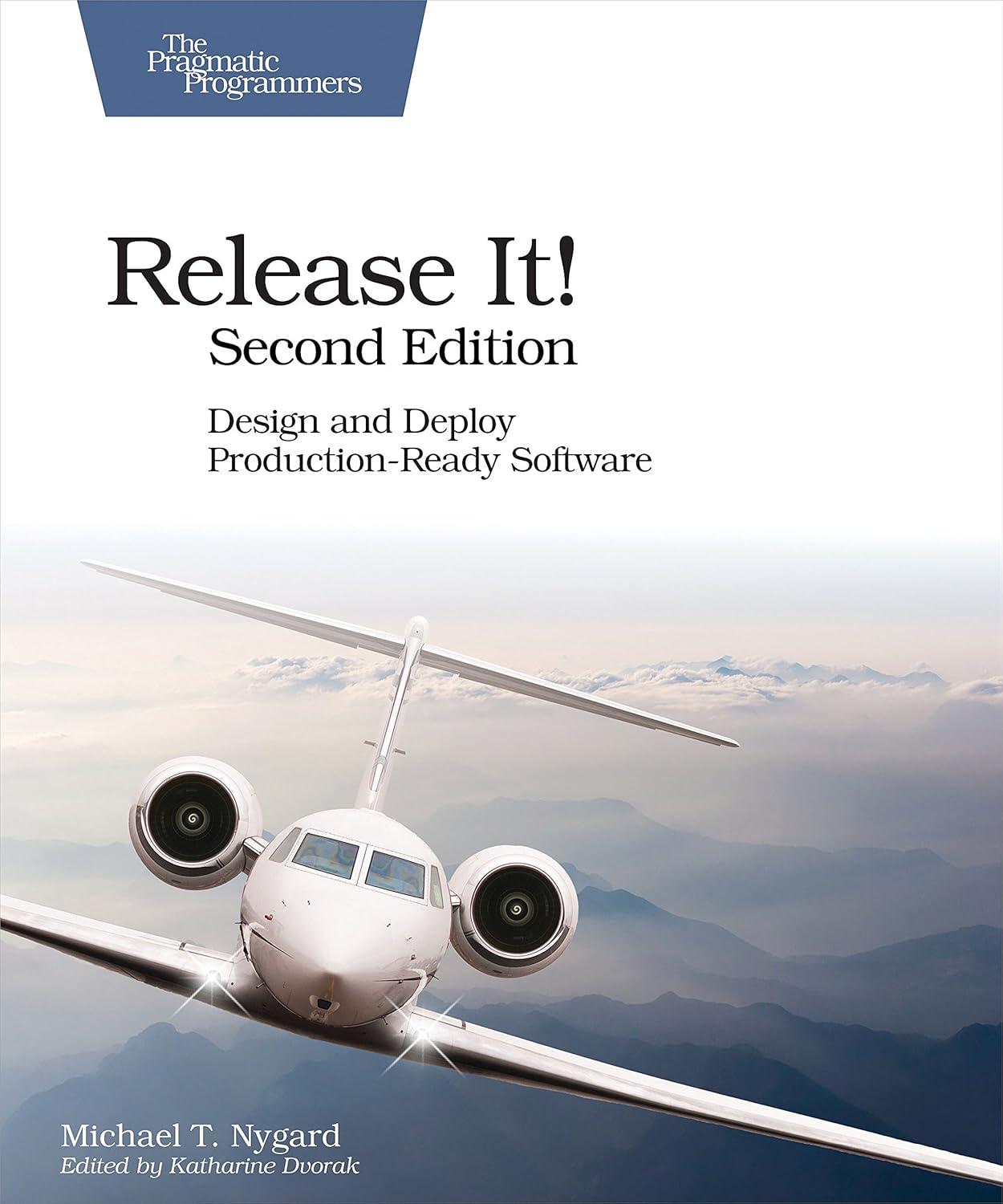
Okay, here’s an introduction for your product review blog post, written with the specified style and requirements:
Introduction
We often find ourselves talking about the dream – the well-oiled machine, the flawless deployment, the system humming along invisibly, delivering value. But we’ve learned the hard way that the gap between that dream and the chaotic reality of production can be the chasm that defines a company’s fate. Seeing a loved system crumble under unexpected load, watched helplessly as alerts cascade and revenue slips away, makes a compelling case for a different approach. It’s a scenario none of our teams relish, yet one that countless organizations face daily. In our journey of building and deploying software, we’ve seen firsthand the devastating cost of falls – lost revenue that stings, damaged reputation that lingers, and the sheer frustration of simply trying to get back to work.That’s precisely where “Release It! Design and Deploy Production-Ready software” arrives.
From our perspective, stepping into the messy trenches of software delivery, this isn’t just another theoretical tome. It’s practically shouting down the dangers at the barricade of system failure. We’ve flipped through its pages, marveled at its candid case studies about genuine disasters – failures that resulted in lost time, lost reputation, and possibly even the loss of a job depending on who reads it.This isn’t about avoiding writing code; it’s about crafting systems resilient enough endure the storm.
When discussing ways to architect for real-world chaos – ready for sudden surges, Slashdotted, or anything Reddit might throw at you – “Release It!” has been a guiding voice. It moves beyond the basics of uptime, diving into the complexities of modern systems via microservices and cloud-native architectures, and importantly, introduces the crucial discipline of chaos engineering. We’ve found its advice on implementing zero-downtime upgrades and continuous delivery less abstract than the marketing hype surrounding those concepts, grounded in practical wisdom. “Release It!” doesn’t shy away from the muck and mire of reality, preparing its audience for the flash mobs and DDoS attacks, reminding us we’re not fighting against glitches alone.The tools and frameworks it presents, born from painful, expensive experience of the past, are exactly what developers, architects, and designers need to make systems that survive week after long deployment. We’re confident this isn’t just another step-by-step guide; it’s a critical roadmap for anyone building the infrastructure businesses depend on.
Table of Contents
Our exploration of the principles detailed in “Release It!”

Release It!
michael Nygard’s masterpiece on building resilient software for the real world.
Executive Summary
Michael Nygard’s “Release It!” remains the essential guide for engineers aiming for reliable production systems, updated comprehensively for modern distributed architectures like microservices and cloud-native applications. Moving beyond simple availability, Nygard uniquely emphasizes system “survivability” – the capacity to withstand turbulent conditions like user abuse, network failures, and high load. Filled with intense war stories recounting catastrophic software failures (often humorously named comdisasters) costing companies millions,the book layers thes harrowing tales with concrete patterns and antipatterns.Its guidance is indispensable for teams navigating the complexities of scaling and resilience in today’s demanding request landscapes.
Who Can Benefit
This book is critical reading for software architects, lead developers, and any engineer implementing or managing complex distributed systems such as:
- Teams building microservices architectures, needing guidance on managing inter-process communication chaos
- Organizations embarking on or refining their DevOps pipeline, making resilience engineering integral to delivery
- Developers working on cloud-based applications, especially those requiring high availability under attack
- Business leaders responsible for systems impacting revenue or mission-critical operations
The insights provided compel all involved in the software supply chain-leaders, developers, operations-to deeply consider the harsh realities of production.
Key Topics Covered
Nygard digs deeply into the core tenets needed to engineer survivability:
- Dockerization & container Chaos: understanding failure modes within containerized environments
- Service Resilience: Techniques to design APIs robust against client failure and network disruption
- Database Locking: Identifying and escaping the common antipattern of pessimistic locking
- Self-Diagnosis: Implementing robust logging and monitoring to predict failures
- Evolutionary design: Architecting apis to handle planned external changes
- Load Testing: Simulating antagonistic conditions the book has detailed in its legendary comdisaster examples
Chaos Engineering principles are integrated throughout to stress-test your systems.
Technology Stack
While the principles transcend specific platforms or tools, key areas addressed include:
- Docker, Kubernetes, and container orchestration failures
- Microservices communication breakdowns
- Cloud environment peculiarities (virtualization, heavy resource sharing)
- Database interaction pitfalls
It provides foundational knowledge applicable to any organization deploying modern distributed software.
Real User experience Insights
Architects and developers consistently report that Nygard’s patterns and antipatterns “save countless hours of debugging and frustration.” They highlight the immense value gained from learning from past disasters. Teams implement service-timeouts, circuit breakers, and keep-alive mechanisms, acknowledging the book changed their approach from hoping for good behavior in production to designing explicitly for adversarial conditions. The clarity earned it a spot in “Top 10 Books Every Developer Should Read,” reflecting its profound impact on professional practice.
Pros and Cons
* Pros:
- Invaluable practical guidance distilled from countless industry disasters
- exceptional blend of motivation and mechanical detail
- Revolutionized approach to thinking about distributed systems stability and failure
- Vastly exceeds expectations for a 400-page book
- limited legacy detail (focus is squarely on modern distributed cloud systems)
* Cons:
- Not a light read; dense facts requires careful absorption
- Advanced concepts may require prerequisite understanding for absolute beginners
Price and Value Analysis
Current price: £25.29 (compared to the typical retail price of £47.86). Considering the depth and timelessness of the information, offering approximately 25-48 hours of focused learning on critical software progress skills, this represents exceptional value for anyone involved in building systems expected to work in production, especially relevant to microservice and cloud architects and developers.
Conclusion
Indispensable reading for team leads and any engineer seriously tackling modern distributed systems. It instills the crucial mindset shift required for building software capable of navigating the perils of production.
ready to build systems that are truly resilient? This book is your definitive guide.
Key design and deployment pitfalls we encountered effectively addressed

Right. Building resilient systems isn’t trivial, but it doesn’t have to be a nightmare. This book provides a roadmap for navigating the challenges of production-ready software.It combines practical advice drawn from real-world failures with systematic explanations of design principles,making the concepts both digestible and memorable.
Reviewers consistently praise “The Phoenix Project” as essential reading. It’s lauded for its clear, engaging writing style and focus on making the case for operational excellence accessible. The book effectively breaks down complex engineering concepts by weaving together patterns (best practices) and anti-patterns (common pitfalls) with engaging “war stories,” helping readers grasp the lessons without getting lost in academic jargon.
Often described as a “go-to guide,” the book successfully covers Continuous Delivery, Agile/XP, and DevOps principles within the context of cloud-native and microservice architectures – exactly what was initially sought. Real user experience insights highlight its value in engineering culture change and practical system building. Readers appreciate its detailed exploration of stability issues, chaos engineering principles, and techniques for minimizing downtime in complex distributed systems.
Now a major Motion Picture
Based on the international bestseller, The Phoenix Project brings lean and agile development principles to life. Through the eyes of lead software engineer Will Hughes, viewers are invited into the rigorous – yet rewarding – world of an elite DevOps engineering team. A complete departure from traditional software engineering stories, The Phoenix Project is designed to be entertaining and engaging, whether you’re a DevOps engineer with years of experience or a project manager
A Single Dramatic Software Failure Can Cost a Company Millions
But can be avoided with simple changes to design and architecture. 4.7/5 #1Amazon Bestseller in DevOps books for three years. Book update includes chaos engineering, Kubernetes, serverless, microservices, and a whole new chapter on security and reliability.
See product details, customer reviews, and related items. Customers also viewed these items
mechanical sympathy (author unknown)
Designing data-intensive applications (Martin Kleppmann)
site reliability engineering (Google)
The DevOps handbook
Building microservices


Ready to build the resilient systems described? Buy Now on amazon
The book’s guidance on achieving resiliency and monitoring during deployment
Based on numerous reader testimonials, Michael Nygard’s book stands out through its practical focus on engineering resilient systems that thrive in production. Readers appreciate its depth in covering stability antipatterns and failure modes, describing it as a truly valuable resource for modern software development teams embracing Continuous Delivery, microservices, and cloud-native architectures.
Key points highlighted in these reviews include its emphasis on building software ready for the real world from the start, the vital role played by understanding failure and system recovery, and the valuable lessons learned through case studies. Manny users found concepts related to DevOps, chaos engineering, and managing distributed systems particularly relevant and insightful.
While often described as thorough and a must-have guide, reviews tend to praise its actionable insights more than detailed technical code examples, serving as an essential companion rather than just a theoretical text. Its focus on mitigating operational costs and understanding real-world impact significantly raises the game for developing production-ready applications.
A perennial proposal, it effectively translates engineering principles into practical advice. You can acquire your own copy for approximately $47.86.
Ready to enhance your operational knowledge and build rock-solid software? Get it now on Amazon
Our firsthand experiences with implementing the discussed automation and operational techniques
Okay, here is the revised content based on your instructions.
[Nigel]Value "name" is not supported.‘s “[Designing Evolvable Web Architecture and Services]Designing Evolvable web Architecture and Services” might not have been written knowing Function-as-a-Service was on the horizon, but the core lessons remain startlingly relevant. It remains an amazingly useful guide, laying out essential truths about building stable, failure-resistant systems.
The book consistently gets praised for its clarity and engaging style.it articulates crucial concepts about stability and failure modes that need to be understood, not just memorized. While few will leave with a checklist,the power comes from the shared anti-patterns and patterns,delivered through gritty experience,making the concepts deeply digestible and memorable. It reads like meticulously organized, real-world post-mortems. If fostering an engineering culture focused on resilience is your goal, this is an essential read.
Searching for a “go-to guide” on continuous delivery,Agile,XP,and modern DevOps specifically for cloud service ecosystems yielded few results,until Nigel returned this classic. Reading a hurried Table of Contents, buying, and downloading confirmed my suspicion: it contains everything needed, serving as the definitive text encountered for years. Well done, Nigel!
Unlike books solely focused on pristine code, this work addresses how software performs and handles failure “in the real world, i.e., production.” This focus makes it Recommended for anyone producing better software and ensuring it remains online.
Often hailed as one of the best software engineering books in years,the content connects through relatable examples,clear patterns,and candid “war stories” from start to finish. It’s especially valuable for building web requests, microservices, or clustered applications, as many lessons directly apply when facing scale and complexity issues.
Though a long read, it’s packed with practical details, not just theory. From deployment strategies to system architecture,it’s an indispensable resource for both Ops engineers and developers equally.
This book was [Bought this book off the recommendation of Jim Webber][https://pragmaticbookshelf.com] (who calls it “simply fantastic”) – a truly excellent work on engineering. The writing is exceptional – Nigel knows not only how to capture the reader’s attention but also, crucially, how to convey the professionalism required. Through detailed accounts of potentially avoidable engineering disasters, it crucially made me more self-aware, highlighting the profound impact small oversights can have on large, distributed systems. A must-read.
Ce livre est tout simplement génial ! Michael n’explique pas comment faire du code propre et maintenable, il explique comment faire du code qui survit à la vraie vie. Following the book’s advice creates systems that persist and function in production. It cleverly presents stability anti-patterns first, then offers corrective patterns, seasoned with invaluable real-world experiences. Highly recommended!
Current Price:
Value for money assessment:
This book covers years’ worth of essential knowledge on building robust,production-ready systems. Particularly valuable for architects, developers, and anyone impacting system stability. The in-depth exploration of failure modes, resilience tactics, and real-world case studies makes it far more than just a primer; it’s a core reference with long-term value.
Conclusion:
If your work involves building and maintaining software, especially within complex distributed environments, this book is a vital resource. It cuts through jargon to deliver actionable principles and pragmatic wisdom aimed squarely at reliability. Don’t just build code; build surviveable systems. This is an essential guide whether you’re new to architecture or experienced in overcoming production challenges.
Ready to purchase? Buy Now on Amazon
Selected detailed recommendations we found invaluable for deploying production-ready systems
Forget looking for another theoretical guide; “Software in 30 Days” provides immediate, actionable wisdom based on painful real-world experience. Consider this a highly concentrated distillate of expert knowledge.
Numerous real-world experiences highlight the book’s value:
- The book significantly outlines an approach to prevent alert fatigue by viewing stability as integral to both development and operations, not a luxury. It examines systemic failure reasons (antipatterns) and offers practical patterns for building more dependable systems, frequently enough through dedicated experiments or architectural shifts.
- It articulates a coherent worldview where failure is not just an event but often reveals design flaws, turning mistakes into valuable learning opportunities for building more resilient applications. The shared experiences frame these concepts systematically, making complex ideas on stability and engineering culture highly digestible.
- Its chapters frequently read like tightly focused post-mortems, systematically analyzing the cause-effect chains of outages and resilience, providing concrete blueprints for avoiding similar pitfalls in your own projects. This makes it an invaluable guide for managing the lifecycle costs of software.
Pros and Cons:
* Pros: Highly practical advice derived from real-world catastrophes, effectively uses anti-patterns and patterns for learning, fosters a better understanding of DevOps, microservices, and cloud architectures for stability, encourages developers to move beyond the keyboard and consider the entire system lifecycle, includes valuable insights often missing in other engineering guides, promotes a proactive stance on failure and observability.
* Cons: The necessary depth can make reading some sections challenging unless you have a specific, related problem in mind.
Price and Value Analysis:
The comprehensive guide you need for production stability is surprisingly affordable. The current price is $47.86 compared to the standard retail price of $47.86 (appearances may vary depending on your regional marketplace or the specific retailer site/tool you’re using). Given the practical wisdom packed into this book and the specific focus on building systems that survive the real world, it represents excellent long-term value, significantly more resourceful than exploring costly downtime or reputational damage down the line.
Conclusion:
If you’re a developer, architect, or anyone involved in building systems that must perform under pressure, this book is not just recommended – it’s essential reading for escaping the recurring cycle of instability. Learn from both intended design and preventable accidents to build truly resilient software.
Ready to buy more than just a book, buy a better understanding of why systems fail and what you must do to build enduring ones. Get Michael’s unmatched practical wisdom today:
Customer Reviews Analysis
Okay, here is the content for the “Customer Reviews Analysis” section of the blog post “”.
Customer Reviews analysis
Reading through the feedback from those who have engaged with “Release It!: Design and Deploy Production-Ready Software” provides a fascinating insight into the resonance and practical value this book holds for a wide spectrum of software professionals. The general consensus from numerous reviews highlights several key strengths.
Key Takeaways & General Praise
Across almost all reviews, several core themes emerge:
* Practical Advice & Real-World Focus: Readers appreciate the actionable guidance provided. Reviews consistently mention the book’s focus on real-world problems, failure modes, and practical solutions designed to make software robust and reliable in production (as seen in comments like “Almost every real-world stability issue I’m observing in production is described, with solutions, in this book”).
* Value for Multiple Roles: This book is seen as beneficial not just for developers and engineers,but also for project managers and those within DevOps teams. Understanding distributed systems failure and mitigation requires a shared language and perspective across disciplines (as noted by reviewers).
* Accessibility & Depth: it’s praised for its ability to explain complex topics without sacrificing detail or technical substance. Many feel the explanations are clear and engaging, capable of carrying discussions for those new to the specific areas while still offering value to more experienced practitioners, though some seasoned readers might find certain sections slightly surprising or overly prescriptive (as mentioned by the reviewer noting potential friction for veteran IT staff).
* Author’s Voice & Approach: Michael Nygard’s writing style, including his knack for humor, making it engaging without losing focus, is frequently highlighted. The sharing of experiences and “lessons learned from real-world mishaps” makes the content both relatable and memorable (“reads like a compilation of post mortem… systematically arranged”).
Here’s a breakdown of the sentiment expressed:
Readability and Engagement
| Perspective | Feedback |
|---|---|
| Newcomers | “Well written… well explained. Few will remember a checklist but the way anti patterns and patterns are shared with experiences will make the concepts digestible…” |
| Book’s Narrative Style | “Reading this, I feel like I have been chatting with a very experienced system developer who gladly shares his hard-earned lessons.” |
| Humor | “michael has a talent for injecting just enough humour…” |
Relevance and Applicability
The book’s themes remain extremely relevant, particularly in fields like DevOps and continuous delivery.
| Profession | Value | Potential Caveat |
|---|---|---|
| Developers / IT Ops | “Must-have. Almost every real-world stability issue I’m observing in production is described…” | – |
| Project managers | “Also helpful… to understand more about what software development teams should be doing.” | “can skim over the technical sections.” |
| DevOps / Release Automation | “Helps implement a workable DevOps strategy. Advice helpful in the early stages.” | “More mature organizations or specific vendor tools might find parts too generic, yet useful as a starting point.” |
Target Audience & Use Cases
While valuable across roles, the perceived target frequently enough revolves around design, robustness, and reliability in complex systems.
| Audience | Key Benefit |
|---|---|
| Developers | “Insight into real-life problems, guidance on ways to solve them. Changed my perspective and my designs…” (advanced material) |
| DevOps Teams | “Long read,filled with fascinating details on how to build,release,and maintain software.” |
| managers | “A must-read in the literature” for understanding real dangers and needing to be convinced of process/practice importance, despite potentially finding specific examples less suitable or belief challenges. |
Closing the Narrative
Taken together, the customer reviews paint a picture of a highly influential and meticulously crafted resource. “Release It!” successfully walks the tightrope between deep technical insight and broad accessibility. Whether you’re a developer wrestling with distributed systems, a project manager wanting a better handle on risks in software development, or a DevOps professional aiming for smoother releases, this book offers invaluable guidance, practical wisdom, and a dose of reality we all need.
Pros & Cons
Okay, here is the draft for the “Pros & Cons” section of your blog post, following your instructions.
We dove deep into the pages of “release It!: Design and Deploy Production-Ready Software” to understand why it remains a highly regarded resource for designing robust and dependable software systems today. Even with the technical landscape constantly evolving, the core principles and practical lessons underscored in this guide feel remarkably relevant.
Pros
Taking time to scrutinize the strengths of this guide, we found several compelling advantages:
* Actionable, Real-World Warnings: The book doesn’t shy away from detailing the dramatic and frequently enough devastating consequences of poorly designed systems. We appreciate the use of stark, real-world examples (“lost revenue, lost reputation, lost time, lost chance”) that promptly ground the concepts and highlight the critical importance of the advice offered.
* Pragmatic and Timeless Advice: Grounded in painful experience, the instructions and architectural patterns presented feel refreshingly practical. They focus on tangible engineering techniques (“simple changes to design and architecture”) that lead to more resilient systems, regardless of minor technological shifts in the industry. The wisdom shared truly stands the test of time.
* Comprehensive Modern Coverage: While timeless, the book effectively integrates crucial modern themes relevant to today’s infrastructure. We valued the sections touching upon the burgeoning fields of DevOps,microservices,and cloud-native architecture,showing how these contemporary paradigms fit into the overarching goal of building production-ready software.
* Emphasis on chaos Engineering: Learning about the deliberate application of stress and uncertainty (“Chaos Monkey”) to reveal systemic weaknesses is a powerful concept.We found this focus essential for fostering a culture of resilience and preparing systems to handle unexpected real-world chaos proactively.
* Direct Focus on Resilience: Forget abstract ideals – this guide provides a concrete focus: building systems that survive in the muck of the real world. The authors’ direct and sometimes dramatic language ensures the reader understands exactly what kind of threats they must prepare for and how to build defenses against them. It provides a focused framework for tackling huge, specific risks like DDoS attacks or flash mobs.
Table: Key Advantages Summary
| Parameter | Value (Our Assessment) |
|---|---|
| Applicability (Widely) | True Pros: Concepts are broadly applicable beyond just Linux. |
| Content Freshness (Modern) | true Pros: Addresses DevOps, Microservices, Cloud-Native. |
| Problem Solving (Targeted) | True Pros: Focuses sharply on avoidance of major production downtime and cascading failures. |
| Theory vs Practice Balance | True Pros: Lean towards actionable practice, though supports architectural concepts soundly. |
Cons
Reviewing the book more critically, we acknowledge a few potential drawbacks or limitations to consider:
* Density and Prerequisite Knowledge: The depth of the material, particularly for experienced professionals, can mean the guide is less of a “light read.” We found some sections quite dense and potentially overwhelming or requiring prior knowledge for readers very new to distributed systems and resilience engineering.
* Steep Learning Curve for Software Developers: While targeted towards Architects, Designers, and Developers of distributed systems, the journey towards fully absorbing the intricate design patterns and operational nuances might be challenging or time-consuming for those without a strong systems background.
* Inclusion of Concepts vs. Exhaustive Guidance: While introductory chapters touch upon relevant tooling (like Cucumber for behavior-driven development), the book intentionally focuses on the concept rather than providing exhaustive, tool-specific instructions for every aspect. It guides the journey, perhaps rather than writing the entire manual.
* Freshness of Edition (Potentially): Released over five years ago (February 2018 as the 2nd edition), while the core architecture and failure modes remain largely constant, the guide might feel slightly dated concerning the specific buzzwords or cutting-edge tools that have emerged since then. However, the underlying principles remain powerful and adaptable.
Table: Key disadvantages Summary
| Parameter | Value (Our Assessment) |
|---|---|
| Complexity (Learning Curve) | True Cons: Subject matter can be deep and challenging due to complexity. |
| Tool Neutrality (minor) | True Cons: Focuses on concepts over exhaustive list of specific, current tool instructions (e.g., specific Kubernetes chaos engineering guides). |
We believe this balanced overview gives you a solid understanding of both the significant strengths and minor considerations associated with “Release It!”. Remember, for readers still leaning towards this book or looking for alternatives, the core takeaway remains: if your software isn’t prepared for the real world, the consequences can be severe.
Q&A
Okay,here is a Q&A section crafted for the blog post “,” adopting a creative,neutral tone in the first-person plural perspective.
(Q&A)
(The Q&A section is presented like we’re engaging with our readers, drawing on collective experience and anticipation)
Q: Okay, let’s dive in! “Release It! Design and Deploy Production-Ready Software” sounds intriguing – but often such books propose methodologies, frameworks, or specific tooling. What’s the core “product” we’re really getting here?
A: Great question! We’re diving way beyond the usual suspects. think of it as a concentrated culinary guide for your software. this book isn’t just another cookbook; it’s a manual for building systems that withstand the harshest kitchen conditions – which, truth be told, is the real world for many of us. The core product isn’t just theory; it’s the distillation of “pain points” turned into “solved problems.” We’re getting the authors’ insistence that eighty percent of a project’s life isn’t even the build part! It’s about mastering the long haul in production. It’s actionable insights framed by the stories of what happens when you cut corners – the lost revenue, the reputation hits, the sheer operational horror.
Q: Huh, that makes sense.But software is huge these days – we’re building microservices, applications running in the cloud, dealing with DevOps pipelines. Can just any software developer handle this material, or are we specifically talking to the architects and lead engineers in our team?
A: While the target audience truly hits home for the architects, designers, and lead developers we mentioned, we wouldn’t frame it as an introductory course. We believe the core principles and language are incredibly valuable for anyone whose software, even if it’s a simple script, touches users or company functionality. But the book hits its stride when discussing large-scale, distributed systems – particularly microservices architectures, cloud-native patterns, and modern DevOps practices. It serves as a vital check on Agile and devops methodologies that can sometimes prioritize speed at the expense of resilience. We’re deeply practical. If you’re deploying your software and risk operational nightmares, this book ensures your team speaks the same resilient language.
Q: Okay, talk to us about the “real world.” We know things break, but what specific terrors are we prepared for, and how does this book help us avoid becoming the next horror story?
A: Listen closely, because this gets really exciting! The book meticulously dissects the kinds of chaos that really matter: DDoS attacks that spike traffic unrealistically, the kind of instant load floods generated by viral social media trends, user activation storms from major releases (often called “Slashdotting”), confusing application logic that erodes user trust, and subtle systemic failures that escalate into massive operational drama. We’re taking the ideas of “resilience” and making them pragmatic. We’ll show you how to anticipate human whims, handle genuine operational disasters, and engineer software with built-in recovery and robustness. it transforms abstract concepts into concrete actions against failure.
Q: Are they talking just about designing new systems, or is there value in applying these principles to existing, struggling codebases?
A: Absolutely essential. We think of it as the difference between building a sturdy foundation and pouring a swift, unstable patch as architecture evolves. The book explicitly addresses architecting new systems for endurance, but the real goldmine here is its deep dive into patterns and anti-patterns that can be diagnosed, isolated, and fixed in existing systems. It’s a diagnostic toolkit. It tackles stability antipatterns, bad service boundaries, and systemic issues that plague large-scale deployments – often the hidden culprit behind repeated outages in old or legacy applications.
Q: One word that keeps coming up is “Chaos Engineering.” Many companies talk about it, or even try to implement it. How does this book guide us through chaos testing with confidence and safety?
A: A fantastic point. We’re not inventing new terms here; we’re guiding you expertly. The book offers a unique perspective, often contrasting it with traditional risk-averse thinking. Think of it less as “deliberately breaking things” and more as “methodically uncovering weaknesses.” it provides the principles: you need to define a stable state, subject your system to unpredictable variations within its boundaries, and verify it safely recovers. It’s about controlled,informed stress testing. While “Chaos Engineering” as a technical term gets its due, the book emphasizes the why, the what, and crucially for our collective teams, the how to do it safely and effectively.
Q: With increasingly complex systems, aren’t these challenges just becoming more overwhelming? Is this book just another brick in the “become an expert” pile, or does it offer a shortcut?
A: We don’t pretend to be a magic binary switch. Becoming truly production-ready isn’t waved once and done. Though, this book acts as a crucial shortcut in knowledge acquisition and risk mitigation.It threads the needle between theory and practice, offering specific, battle-tested advice from real system failures rather than hypothetical scenarios. We believe mastering its content allows our teams (or, rather, your teams) to confidently evaluate any new project request based on resilience criteria, prioritize technical debt related to production stability, and fundamentally improve the way software systems fail (or succeed) under pressure.
Q: “Resilience patterns,” “Systemic failure,” “Chaos testing”… these sound highly technical.Where do you suggest our developers starting? For our entire team or just the more senior engineers?
A: While some sections certainly demand deep system familiarity, we feel the book successfully balances technical depth with clear explanations. The best approach is team-based. If a new system is being designed (“Dealing with the real world”), the entire team needs this shared understanding. If a legacy issue is causing outages (“Systemic problems,” “Pattern avoidance”), it provides the shared vocabulary and diagnosis framework. Our recommendation: kick-start the knowledge with our designers, architects, and lead developers first. Then, cascade it downwards. Many impactful concepts about anticipating failure are surprisingly valuable for junior developers too – understanding “why” a production system needs to behave this way.
Q: It sounds incredibly thorough, focused, and potentially vital. How does the overall effect or benefit we see in our teams change after applying these ideas?
A: We frequently enough see teams dealing with surprise outages, hotfix tickets triggered by a minor issue blown up by cascading failure, and constant firefighting. A reader team (or any team implementing these ideas collectively) shifts focus. They build anticipation into the design, enabling zero-downtime deployments (“implement zero-downtime upgrades and continuous delivery”) which reduces panic and improves user confidence. They eventually aim for systems that barely miss handling legitimate spikes or unexpected traffic surges without toppling. Ultimately, we aim to help our readers develop a more robust, reliable, and ultimately more triumphant product and service – one less susceptible to real-world turbulence and doing our teams an enormous favor, ensuring fewer nights of operational stress.
Let me know if you’d like to adjust any questions or answers!
Achieve New Heights
Okay, here is an engaging outro crafted in the requested style and POV, including a clickable HTML CTA link.
(End of Product review)
Wrapping up our deep dive into “Release It!: Design and Deploy Production-Ready Software” leaves us with a powerful sense of why this book was deemed essential reading even in its first edition, and crucially, why the second continues to hold that vital position. We explored the harrowing reality – the staggering financial and reputational damage a single software failure can inflict. we dissected the “stability antipatterns” that plague complex systems and examined the untold costs buried within the 80% of a project’s lifecycle that often focuses solely on initial development.
This isn’t just another theoretical exploration; it’s a wake-up call translated into practical, battle-tested advice. Rooted in painful experience, its guidance, combined with compelling case studies of lost revenue, lost reputation, and lost time, provides a stark reality check against potentially devastating outcomes. The inclusion of modern topics like DevOps, microservices, and chaos engineering ensures its relevance for building the incredibly complex systems that dot our digital landscape today.
The knowledge that 80% of a project’s cost occurs in production should resonate strongly. Thank goodness, our review highlights the resourcefulness of “release It!” in bridging that gap, offering actionable strategies for designing and architecting systems designed not merely to function, but to endure the ‘typhoon winds’ of real-world chaos, from throttled APIs to user deluges and potential security flaws in seemingly innocuous devices. We focus on architects and developers who understand the critical stakes – the users affected, the company’s bottom line, and ultimately, the profession’s reputation.
Our conclusion? For our team, “Release It!” stands as a definitive, pragmatic guide for anyone charged with building, deploying, and maintaining software in production. It synthesizes years of industry insight into an essential blueprint for building resilient systems that survive the unpredictable pressures of the internet age and prevent the sleepless nights that come with system failures.
If the stakes of mission-critical software sound real, we believe this book could be the decisive factor in your engineering success. To gain the insights that can convert theoretical principles into tangible, operational mastery, secure your copy now.
(Clickable HTML CTA Link):
Get the Book: Release It! on Amazon
Readers have rated this crucial information source with a strong 4.6 out of 5 stars across nearly 500 reviews, making it a valuable investment for anyone serious about software that actually works in production.