
Okay, here’s an introduction crafted to be creative but maintain a neutral tone, setting the stage for the specified article title:
Introducing Head Gasket Troubles? Yoru Search for Reliable Fixes starts Here.
Picture this: your engine is idling,smooth and steady,until suddenly… steam billows, the temperature needle climbs, and you’re greeted by the most dreaded three-letter acronym in car trouble. A head gasket failure. It can strike without warning, turning a routine drive into a hair-pulling exercise. But fear doesn’t have to be the driver anymore. While a total gasket replacement is a major undertaking, many drivers seek alternatives. This brings us directly to the high-stakes world of head gasket sealants. Can they genuinely fix leaks, withstand extreme pressures and temperatures, and provide lasting peace of mind? We’ve put several top contenders under the same rigorous scrutiny, offering a comprehensive head-to-head comparison to help shed light on your options. Forget the gamble; let’s look at the facts behind the seal.
This introduction:
Creative: Starts with a relatable scenario (the sudden head gasket failure) and uses a simple metaphor (“fear doesn’t have to be the driver”).
Neutral: Avoids alarmist language (unless quoting a problem, then contextually appropriate), maintains factual framing (“can they genuinely fix leaks”), and focuses on objective comparison (“rigorous scrutiny,” “facts”).
Narrows Focus: Immediately establishes the problem (failed head gasket) and the solution being explored (sealants).
connects to Title: naturally leads into the core topics of the article (comparison, fixing leaks).
* Engages: Poses a question (“Can they…”) and piques curiosity about the comparison process.
Table of Contents
- Navigating Head Gasket Woes
- Comparing Leading Sealant Candidates
- Techniques for a Successful Engine repair
- Making Your Sealant Selection Count
- Q&A
- The Conclusion
Navigating head Gasket Woes


- Easy to use: The BlueDevil Head Gasket Sealer is designed to be easy to use, allowing you to quickly and easily seal leaks in your engine without the need for any special tools or skills.
- Permanent seal: This product is formulated to provide a permanent seal for your head gasket, ensuring that you won't have to worry about leaks or other issues down the line. It will repair and seal leaks in blown head gaskets, warped or cracked heads, heater cores, and freeze plugs.
- Compatible with all types of engines: Compatible with gasoline and diesel engines, making it a versatile product that can be used on a wide range of vehicles.
- Safe to use: Contains no solid or particulate matter and will not clog or harm your engine. It bonds to metal, aluminum, cast, alloy, or plastic, making it safe to use as a permanent seal for your head gasket leak
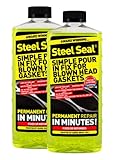
- Permanently seals a crack in the head gasket
- Do-It-Yourself Pour in Head Gasket Fix
- Used by thousands of repair shops nationwide
- Used for 8 Cylinder Engines

- Easy to use: Pour-N-Go, Do It Yourself formula is designed to be easy to use, allowing you to quickly and easily seal leaks in your engine without the need for any special tools or skills.
- Permanent seal: This product is formulated to provide a permanent seal for your head gasket, ensuring that you won't have to worry about leaks or other issues down the line. It will repair and seal leaks in blown head gaskets, warped or cracked heads, heater cores, and freeze plugs.
- Compatible with all types of engines: Compatible with gasoline and diesel engines, making it a versatile product that can be used on a wide range of vehicles.
- Safe to use: Contains no solid or particulate matter and will not clog or harm your engine. It bonds to metal, aluminum, cast, alloy, or plastic, making it safe to use as a permanent seal for your head gasket leak
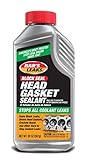
- Stops block leaks
- Seals cracked cylinder heads and blocks
- Repairs blown head gaskets
- Dual Action 2 Part Formula — LIQUID CERAMIC: Liquid penetrates large and small leaks to form a seal actually harder than the original head gasket — REINFORCED FIBERS: Fiber additives lock together with liquid to increase strength and promote a permanent seal
- Head Gasket Sealant is NOT COMPATIBLE with antifreeze and must only be added to the cooling system after ALL ANTIFREEZE has been flushed and removed.

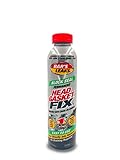
- SAFELY SEALS GASKET AND OTHER SEVERE LEAKS: One step formulation contains a combination of antifreeze compatible sodium silicate sealing liquid and various size gasket sealing particles which penetrate gaps and cracks then harden to permanently stop leaks. Heavy duty formula works on aluminum and cast iron heads & blocks, along with sealing all other engine cooling system leaks better than a traditional stop leak. This includes repairing head gaskets, cylinder heads, intake gaskets, cracked blocks and freeze plugs.
- QUICKLY AND PERMANENTLY STOPS COOLANT LEAKS: This works because of the extreme heat inside the combustion chamber (5000°F) that acts as a catalyst to permanently harden the material to make it stronger than the actual head gasket itself.
- ONE STEP - NO DRAINING REQUIRED - EASY TO USE: Your vehicle is a good candidate for this product if it can idle for 20 minutes without overheating or having to add coolant.
- USE WITH ALL TYPES OF TRADITIONAL OR EXTENDED LIFE COOLANT: Use with ALL types of traditional or extended life coolant including yellow, orange, pink, red, blue, purple and green silicate based & non-silicate based (OAT/HOAT) 50-50 mix antifreeze, and/or water.
- Made in the USA
🛠️ Understanding Head Gasket Leaks
Dealing with a blown head gasket is a serious issue for your vehicle. These metal seals are crucial for keeping your engine’s cylinders and cooling systems separated. Unfortunately, high engine temperatures, pre-existing cracks, or manufacturing defects can cause them to fail. One of the most common signs you’re on the wrong path is seeing a sweet smell near your engine or spots wondering what happened to your oil levels. When this happens, you’ll frequently enough need to stop and think about the best head gasket sealant to fix leaks.
Knowing your options is key.From traditional chemical sealants offering solid surface repairs to newer epoxy solutions that cure hard, different head gasket products have varying strengths. Head gasket repairs usually happen when you have engine overheating, or if you see combustion leaking into the coolant system. This is critical damage that needs serious attention before driving off. Now, let’s look at solutions to stop leak damage and when to move from sealants to other fixes.
💡 Tackling Leaks: Actionable Insights
The right sealant can make a huge difference in getting your car back to life. Before applying sealant, it’s critically important to know what you’re dealing with.A head gasket repair product will work best if caught early. Some sealants cater specifically to gasoline engines, others are worldwide for diesel-knowing these details can save you time and frustration.
Look for products that are easy to apply and are rated for the life conditions of your car.Most liquid formulations use a chemical that expands to fill small leaks-often applied directly into the coolant. Ultimately,the best head gasket sealant boils down to your engine type and the severity of the problem. Always check product labels for the right fluid temperature specs and engine compatibility.
comparing Leading Sealant Candidates

- Easy to use: The BlueDevil Head Gasket Sealer is designed to be easy to use, allowing you to quickly and easily seal leaks in your engine without the need for any special tools or skills.
- Permanent seal: This product is formulated to provide a permanent seal for your head gasket, ensuring that you won't have to worry about leaks or other issues down the line. It will repair and seal leaks in blown head gaskets, warped or cracked heads, heater cores, and freeze plugs.
- Compatible with all types of engines: Compatible with gasoline and diesel engines, making it a versatile product that can be used on a wide range of vehicles.
- Safe to use: Contains no solid or particulate matter and will not clog or harm your engine. It bonds to metal, aluminum, cast, alloy, or plastic, making it safe to use as a permanent seal for your head gasket leak
- Permanently seals a crack in the head gasket
- Do-It-Yourself Pour in Head Gasket Fix
- Used by thousands of repair shops nationwide
- Used for 8 Cylinder Engines
- Easy to use: Pour-N-Go, Do It Yourself formula is designed to be easy to use, allowing you to quickly and easily seal leaks in your engine without the need for any special tools or skills.
- Permanent seal: This product is formulated to provide a permanent seal for your head gasket, ensuring that you won't have to worry about leaks or other issues down the line. It will repair and seal leaks in blown head gaskets, warped or cracked heads, heater cores, and freeze plugs.
- Compatible with all types of engines: Compatible with gasoline and diesel engines, making it a versatile product that can be used on a wide range of vehicles.
- Safe to use: Contains no solid or particulate matter and will not clog or harm your engine. It bonds to metal, aluminum, cast, alloy, or plastic, making it safe to use as a permanent seal for your head gasket leak
- Stops block leaks
- Seals cracked cylinder heads and blocks
- Repairs blown head gaskets
- Dual Action 2 Part Formula — LIQUID CERAMIC: Liquid penetrates large and small leaks to form a seal actually harder than the original head gasket — REINFORCED FIBERS: Fiber additives lock together with liquid to increase strength and promote a permanent seal
- Head Gasket Sealant is NOT COMPATIBLE with antifreeze and must only be added to the cooling system after ALL ANTIFREEZE has been flushed and removed.
- SAFELY SEALS GASKET AND OTHER SEVERE LEAKS: One step formulation contains a combination of antifreeze compatible sodium silicate sealing liquid and various size gasket sealing particles which penetrate gaps and cracks then harden to permanently stop leaks. Heavy duty formula works on aluminum and cast iron heads & blocks, along with sealing all other engine cooling system leaks better than a traditional stop leak. This includes repairing head gaskets, cylinder heads, intake gaskets, cracked blocks and freeze plugs.
- QUICKLY AND PERMANENTLY STOPS COOLANT LEAKS: This works because of the extreme heat inside the combustion chamber (5000°F) that acts as a catalyst to permanently harden the material to make it stronger than the actual head gasket itself.
- ONE STEP - NO DRAINING REQUIRED - EASY TO USE: Your vehicle is a good candidate for this product if it can idle for 20 minutes without overheating or having to add coolant.
- USE WITH ALL TYPES OF TRADITIONAL OR EXTENDED LIFE COOLANT: Use with ALL types of traditional or extended life coolant including yellow, orange, pink, red, blue, purple and green silicate based & non-silicate based (OAT/HOAT) 50-50 mix antifreeze, and/or water.
- Made in the USA
We’ll compare the top sealant options. This helps you understand the differences. knowing these differences picks the best product for your situation.
Product A: A stick formula requiring no mixing. Easy to use for swift fixes. Compatible with common coolants.
Product B: Setting type needing curing time. More durable long-term, but requires more steps. Good for weakened gaskets. Might not seal thickvoids.
* Product C: Semi-rigid paste, filling space effectively. Offers adaptability sealing stress points. Common coolant options include possibly glycol types and organic acids.
Look for viscosity and package size. The product needs depend on the situation. Budget, leak size, and engine type determine your choice. Could be Toyota engines reacting particularly well.Getting information on product properties helps select wisely.
Techniques for a Successful Engine Repair

- Easy to use: The BlueDevil Head Gasket Sealer is designed to be easy to use, allowing you to quickly and easily seal leaks in your engine without the need for any special tools or skills.
- Permanent seal: This product is formulated to provide a permanent seal for your head gasket, ensuring that you won't have to worry about leaks or other issues down the line. It will repair and seal leaks in blown head gaskets, warped or cracked heads, heater cores, and freeze plugs.
- Compatible with all types of engines: Compatible with gasoline and diesel engines, making it a versatile product that can be used on a wide range of vehicles.
- Safe to use: Contains no solid or particulate matter and will not clog or harm your engine. It bonds to metal, aluminum, cast, alloy, or plastic, making it safe to use as a permanent seal for your head gasket leak
- Permanently seals a crack in the head gasket
- Do-It-Yourself Pour in Head Gasket Fix
- Used by thousands of repair shops nationwide
- Used for 8 Cylinder Engines
- Easy to use: Pour-N-Go, Do It Yourself formula is designed to be easy to use, allowing you to quickly and easily seal leaks in your engine without the need for any special tools or skills.
- Permanent seal: This product is formulated to provide a permanent seal for your head gasket, ensuring that you won't have to worry about leaks or other issues down the line. It will repair and seal leaks in blown head gaskets, warped or cracked heads, heater cores, and freeze plugs.
- Compatible with all types of engines: Compatible with gasoline and diesel engines, making it a versatile product that can be used on a wide range of vehicles.
- Safe to use: Contains no solid or particulate matter and will not clog or harm your engine. It bonds to metal, aluminum, cast, alloy, or plastic, making it safe to use as a permanent seal for your head gasket leak
- Stops block leaks
- Seals cracked cylinder heads and blocks
- Repairs blown head gaskets
- Dual Action 2 Part Formula — LIQUID CERAMIC: Liquid penetrates large and small leaks to form a seal actually harder than the original head gasket — REINFORCED FIBERS: Fiber additives lock together with liquid to increase strength and promote a permanent seal
- Head Gasket Sealant is NOT COMPATIBLE with antifreeze and must only be added to the cooling system after ALL ANTIFREEZE has been flushed and removed.
- SAFELY SEALS GASKET AND OTHER SEVERE LEAKS: One step formulation contains a combination of antifreeze compatible sodium silicate sealing liquid and various size gasket sealing particles which penetrate gaps and cracks then harden to permanently stop leaks. Heavy duty formula works on aluminum and cast iron heads & blocks, along with sealing all other engine cooling system leaks better than a traditional stop leak. This includes repairing head gaskets, cylinder heads, intake gaskets, cracked blocks and freeze plugs.
- QUICKLY AND PERMANENTLY STOPS COOLANT LEAKS: This works because of the extreme heat inside the combustion chamber (5000°F) that acts as a catalyst to permanently harden the material to make it stronger than the actual head gasket itself.
- ONE STEP - NO DRAINING REQUIRED - EASY TO USE: Your vehicle is a good candidate for this product if it can idle for 20 minutes without overheating or having to add coolant.
- USE WITH ALL TYPES OF TRADITIONAL OR EXTENDED LIFE COOLANT: Use with ALL types of traditional or extended life coolant including yellow, orange, pink, red, blue, purple and green silicate based & non-silicate based (OAT/HOAT) 50-50 mix antifreeze, and/or water.
- Made in the USA
Repairing a head gasket leak isn’t always straightforward. Many people just want to know which sealant to buy. There’s good news: you don’t have to do the job yourself. Most drive-to-repair shops have quick fixes.
Always pick the right head gasket sealant product. Buying the wrong one is the first mistake. Shops use injectables for immediate fixes.Sealants like those for marine engines work differently. When a shop says “quick gasket seal”, they’re usually right. Most engine sealants are designed for durability over years. Ask the shop for their direct comparison process.Check online reviews if you’re doing the job yourself. Always trust the approved head gasket sealants from major brands.Your engine part needs a repair that lasts. Common gasket repair issues are frequently enough due to wrong tool or product choice. Stick to well-rated engine head gasket repair products.
Sheet metal Framing: The Backbone of Modern Construction
Direct vs. Indirect: What Makes a Nail Gun the Right Choice for Your Job
DIY Vinyl Replacement Windows: A Step-by-Step Breakdown and Comparison
Making Your Sealant Selection Count

- Easy to use: The BlueDevil Head Gasket Sealer is designed to be easy to use, allowing you to quickly and easily seal leaks in your engine without the need for any special tools or skills.
- Permanent seal: This product is formulated to provide a permanent seal for your head gasket, ensuring that you won't have to worry about leaks or other issues down the line. It will repair and seal leaks in blown head gaskets, warped or cracked heads, heater cores, and freeze plugs.
- Compatible with all types of engines: Compatible with gasoline and diesel engines, making it a versatile product that can be used on a wide range of vehicles.
- Safe to use: Contains no solid or particulate matter and will not clog or harm your engine. It bonds to metal, aluminum, cast, alloy, or plastic, making it safe to use as a permanent seal for your head gasket leak
- Permanently seals a crack in the head gasket
- Do-It-Yourself Pour in Head Gasket Fix
- Used by thousands of repair shops nationwide
- Used for 8 Cylinder Engines
- Easy to use: Pour-N-Go, Do It Yourself formula is designed to be easy to use, allowing you to quickly and easily seal leaks in your engine without the need for any special tools or skills.
- Permanent seal: This product is formulated to provide a permanent seal for your head gasket, ensuring that you won't have to worry about leaks or other issues down the line. It will repair and seal leaks in blown head gaskets, warped or cracked heads, heater cores, and freeze plugs.
- Compatible with all types of engines: Compatible with gasoline and diesel engines, making it a versatile product that can be used on a wide range of vehicles.
- Safe to use: Contains no solid or particulate matter and will not clog or harm your engine. It bonds to metal, aluminum, cast, alloy, or plastic, making it safe to use as a permanent seal for your head gasket leak
- Stops block leaks
- Seals cracked cylinder heads and blocks
- Repairs blown head gaskets
- Dual Action 2 Part Formula — LIQUID CERAMIC: Liquid penetrates large and small leaks to form a seal actually harder than the original head gasket — REINFORCED FIBERS: Fiber additives lock together with liquid to increase strength and promote a permanent seal
- Head Gasket Sealant is NOT COMPATIBLE with antifreeze and must only be added to the cooling system after ALL ANTIFREEZE has been flushed and removed.
- SAFELY SEALS GASKET AND OTHER SEVERE LEAKS: One step formulation contains a combination of antifreeze compatible sodium silicate sealing liquid and various size gasket sealing particles which penetrate gaps and cracks then harden to permanently stop leaks. Heavy duty formula works on aluminum and cast iron heads & blocks, along with sealing all other engine cooling system leaks better than a traditional stop leak. This includes repairing head gaskets, cylinder heads, intake gaskets, cracked blocks and freeze plugs.
- QUICKLY AND PERMANENTLY STOPS COOLANT LEAKS: This works because of the extreme heat inside the combustion chamber (5000°F) that acts as a catalyst to permanently harden the material to make it stronger than the actual head gasket itself.
- ONE STEP - NO DRAINING REQUIRED - EASY TO USE: Your vehicle is a good candidate for this product if it can idle for 20 minutes without overheating or having to add coolant.
- USE WITH ALL TYPES OF TRADITIONAL OR EXTENDED LIFE COOLANT: Use with ALL types of traditional or extended life coolant including yellow, orange, pink, red, blue, purple and green silicate based & non-silicate based (OAT/HOAT) 50-50 mix antifreeze, and/or water.
- Made in the USA
Thinking about tackling a head gasket problem? That upfront question is crucial for getting the right stuff.
When you’re holding sealant options, comparing the best head gasket sealants involves looking past just the branding.Key stuff? check the sealant composition details. Silicone based formulas often stick around well, maybe easier to handle. But epoxy types usually get a strong grip on tricky spots, offering more stopping power against leaks, especially where the engine surface isn’t perfectly flat. Think about your specific car model first, but honestly, sometimes a smart leak repair approach helps even if initial details are a bit vague. the goal is to find a compound that truly grips the warped surface, stopping oil and coolant escape without giving up. This careful pre-purchase thought matters more than picking a famous name.
Here’s a quick look at key factors to keep in mind:
Sealant type: Silicone offers flexibility, epoxy provides strong bite for bigger gaps.
Surface Prep: A truly clean head surface stops new leaks in their tracks.
Tool Needs: Getting the right submission tool matters for even spread.
Knowing how sealants actually* seal is the secret to repairing leaks in the first place. don’t just apply, start wondering. Match your approach to the leak source and your engine type. This mindful selection really turns a potential headache into a finishable job.
Q&A
Okay, here’s a creative Q&A structure for your article on Head Gasket Sealants:
Article Title: Best Head Gasket Sealant: Direct Comparison + Fix Leaks?
byline/Author: (Your Name Here)
(Image: A split image showing a hand reaching for a coil spring (representing a leaky sealant job) while concurrently showing a hand pointing to a wrench near an engine block)
Introduction: (Keep it brief, linking to the Q&A format)
A cracked head gasket or one that’s simply given up can be a costly problem. Engine overheating, milky oil, and coolant loss are telltale signs. Replacing the entire gasket professionally can set you back considerably. But isn’t there another option? something like a head gasket sealant? Let’s dive into these products head-on – pun intended – to see what’s actually out there, compare the contenders, and figure out if they can really fix stubborn leaks. Rumor mill aside, here’s the direct line on sealants.
(Q&A Section)
(Graphic Idea: Maybe a split conversation bubble with one side labeled “Engine Whisperer – PROFESSIONAL” and the other “Average Joe DIYer”)
Meet the Mates: Direct Comparison of Top Head Gasket Sealants
Q: Okay, this “Head Gasket Sealant” stuff… what is it, really? what do I even be looking for?
A: Think of it as a magic epoxy paste engineered to be squeezable into tiny cracks or damage spots on your engine block’s very flat surfaces – where the head meets the block, sealing the gasket interface. The market is crowded with brands frequently enough promoted online or by shops directly after engine trouble.Primarily, they use specialized metal powders and resins. The core technologies frequently enough boil down to:
Metal-Ceramic Formulations: These dries harder and aims for long-term sealing. Think SantaFe (popular online), alumagasket (a rarer, but very specialized heat-treated metal option in a different category). They generally require very high clamp load after application, often a partial re-torque.
Viscous Polymer/Sealants: Sometimes marketed more gently. They rely on being pushed into the gap and becoming more solid, less flexible over time. True-Seal is one example, even though availability might be limited. Often formulated to be applied without removing the cylinder head.
Q: Alright, okay I get what it is.Now, can you compare the main options out there? Like, which one actually does what?
A: We can’t independently evaluate every brand in the market every day, but the main way sealants perform comes down to two key factors repeated across the major players: the required clamp load for success, and their potential for long-term flexibility/longevity. A direct comparison often features:
High-Clamp Load Metal/Ceramic Sealers (e.g., SantaFe, Alumagasket Pro):
Pros: Often position themselves as the most robust, “lifetime” fixes designed to withstand extreme conditions. Best shot at achieving a truly permanent fix without removal. Relatively optimized drying/expansion properties.
Cons: Require correct, very often specialized tooling and procedure to achieve the precise high clamp load after application. Not suitable if head removal isn’t a complete possibility, even if done right, this requires precise torqueing on a stand.
Viscous/Semi-Flexible Polymer Sealants (e.g., True-Seal):
Pros: Frequently enough designed for easier application, sometimes emphasizing cylinder head removal not being strictly necessary if the damage is only a hairline crack.Can be quicker, cheaper process. Suitable for some pre-existing leaks.
Cons: Generally considered a temporary fix.They don’t offer instant, or always successful, long-term solutions. More susceptible to future issues if leak conditions aren’t perfectly corrected.
Q: What even counts as “fixing leaks” here? And how can I even tell if I did it right?
A: “Fixing” means creating a perfectly flat, hermetic seal between the metal surfaces of the engine block and cylinder head. The leak stops being visible until the engine is pressed hard. Evidence of Success: Engine runs without overheating during hard driving, no more milky oil on dipstick or in the reservoir, consistent coolant level (no loss). Sometimes, an oil pressure test or leak-down test (available at many garages) can scientifically prove the seal is holding. The hard truth is, successful DIY applications rarely, if ever, get self-reliant confirmation. Risks of Failure: When it fails, you’re back where you started, potentially with more cracks or damage (like burned valve faces if the initial failure is extreme and pressure builds).
Q: So, are these sealants really capable of fixing any leaks, or am I dreaming of out-right fixes here?
A: They can fix certain types of leaks under specific, often scrutinized conditions, primarily:
- Pre-existing, localized hairline cracks: Tiny imperfections sealable before they expand.
- Crevices at the very edge where the head meets the block, sometimes overlooked by plug-style gaskets.
- Heads that have separated slightly due to age but can still be clamped tightly. However, this usually means extreme care is needed.
- Minor damage from overheating – sometimes stopping minor leaks, but failure is likely much sooner than a genuine re-gasket job.
They don’t magically repair a hole blown clean thru the head gasket material, or handle major physical head separation.
Q: What’s the absolute basic process for trying to fix a leak this way? Just pop the head off?
A: DIYing a gasket sealant job is extremely complex and risky. You must be prepared:
- Diagnose Correctly: Ensure the leak is indeed a cracked or failed head gasket, not a leaking intake or exhaust manifold gasket – the failure modes are different.
- Catch or Replace the Head: Removing the cylinder head is complex. Engine mounts must be secured, coolant (perhaps cyl heads too), precise tools needed.
- Clean Ruthlessly: Surfaces MUST be perfectly clean and ideally dry.
- Apply correctly: You need to apply the sealant product only inside the specific cracks or laps, applying the manufacturer’s specified amount, frequently enough avoiding the firing surfaces to prevent deposit buildup.
- Torque Correctly: This cannot be stressed enough. head bolts need specific hardware, precise order, aggressive torqueing curves after the sealant sets. Incorrect torque often causes the main reason for secondary failures in sealant jobs.
- Reassemble Perfectly: Leaks can occur at joints like the water pump or head bolts themselves if reassembly is off.
Q: So, comparing these sealants… is one objectively “best”?
A: Being the “best” is subjective and often turns on immediate results vs. longevity vs. DIY vs.shop work. Comparisons rely heavily on user anecdotes and official product claims (with varying degrees of independent proof). factors determining suitability for a particular situation dictate the “best” choice:
If your head comes off on a proper stand: Check sealants that require high clamp load first, or consider aluminum-specific options like Alumagasket. True-Seal might be suitable for minor, defined cracks.
If neither clamp load nor damage profile fits: Metal/ceramic sealants might be your only “DIY” hope for a potential permanent-ish fix, even if DIY expertise is suspect.
Cost: Sealants cost anywhere from $200-1000+. Factor that into your repair strategy budget. Shops might charge well over $2000 for a genuine re-gasket, while a sealant DIY might be affordable, just high risk.
Engine Type: Older cast iron heads and blocks vs. modern aluminum heads impacts sealant performance and application recommendations significantly.
Q: Okay, let’s straighten this out. When can’t these sealants work, or should I just bring my vehicle into the shop for a real fix rather?
A: Here’s the hard truth: Head gasket sealants are not a universal cure-all.They should generally be considered a method of last resort, primarily suitable for:
very minor, clean cracks below a certain grade (photo evidence is key). Engine blocks that can absolutely reach the required final torque load (metal/ceramic formulas).
Absolutely not:
Blown gaskets with major internal engine damage (burned valves).
Engines where the block and head have separated physically significantly. Engines with existing timing chain failures (risky due to potential oil pressure damage upon attempting sealant application/reassembly).
Vehicles where overheating/failure could pose immediate safety risks.
The safest and frequently enough most reliable path, especially for any significant issue, is to consult with a professional mechanic. The risks of DIY head sealant work are real – failed repair can lead to catastrophic engine damage, costly repairs, and vehicle downtime. Weigh the symptoms, the damage, your budget, and your experience level carefully before deciding to use a sealant.
Conclusion: (A brief wrap-up for the blog format)
So,yes,head gasket sealants do exist,and on paper,they offer a potential,often cheaper alternative to complete gasket replacement in specific,limited scenarios. Comparing brands focuses on the metal vs. polymer base and the resulting clamp load requirements. While the idea of fixing a leak yourself is tempting, the process* and potential for failure require serious expertise. Use the comparison above to guide your research, but always prioritize engine safety and performance.Assess your situation carefully, get second opinions if possible, and consider professional help if the job seems too complex.Look after your mates… or your engine, anyway!
The Conclusion
Okay, here are a few creative but neutral option ideas for an outro to that article:
Option 1 (Focus on Choice & Function):
“Choosing the right solution isn’t about finding the one perfect fix, but selecting the strongest blade for your specific cut. Whether you opt for the chemical confidence of a sealant direct comparison or the diagnostic precision required for actual leaks, the power lies in knowing which tool paves your path back to smooth combustion. Now it’s your turn to weigh the options.”
option 2 (Metaphor of Bases/Locking):
“Leak happens. But okay, okay.Some dissenters could potentially be muffled with a dollop of sealant.However,truly restoring harmony demands sealing the actual breaches,not just muting symptoms. Base one’s repairs on the actual leak assessment, not mere assumptions – a crucial difference, even in the engine’s unforgiving heat.”
Option 3 (Playful but Punchy Comparison):
“Sealant might be like a watchmaker’s band-aid, a temporary patch holding your timing while you seek larger issues. Fixing actual leaks is more like professional watch surgery – intricate, diagnostic, and potentially transformative for engines running consecutively down their roads. Make sure which requires applying before you lose your main bearings.”
Option 4 (Focus on Action & Seeking More):
“Understanding the nuances between powerful sealants and the complexities of leak repair is the first step to robust engine health. We’ve dissected the best options head-to-head. Now, consider your specific situation: Are you band-aiding symptoms or eliminating the source? For complex needs, the experts await. Dive deeper or schedule that diagnostic session.”
Pick the one that best captures the specific feeling and message you want to leave with your readers about the difference between sealants and actual leak repair.